In late 2024, millions of users received an unassuming email from Google: the web interface of Google Timeline was being turned off, and location records were being locked down solely to individual devices with strict backup retention limits.
For power users, quantified-self enthusiasts, and long-term lifeloggers, the message was deafeningly clear: if your memories live on someone else's cloud server, they were never truly yours to begin with.
The Spatial Paradox: High Value, Extreme Risk
Continuous location tracking is easily the most intimate data category that exists. Your GPS coordinates do not merely describe an abstract point on a map; they reveal:
- Where you sleep and when you wake up
- Which medical clinics and therapy centers you visit
- Whom you meet in the dead of night at secluded diners
- Your exact political, spiritual, and social rhythms
Yet, spatial data is also the single most evocative anchor of human memory. When looking back on a trip five years ago, a precise map trace through the back alleys of Kyoto sparks recollections that no calendar appointment ever could.
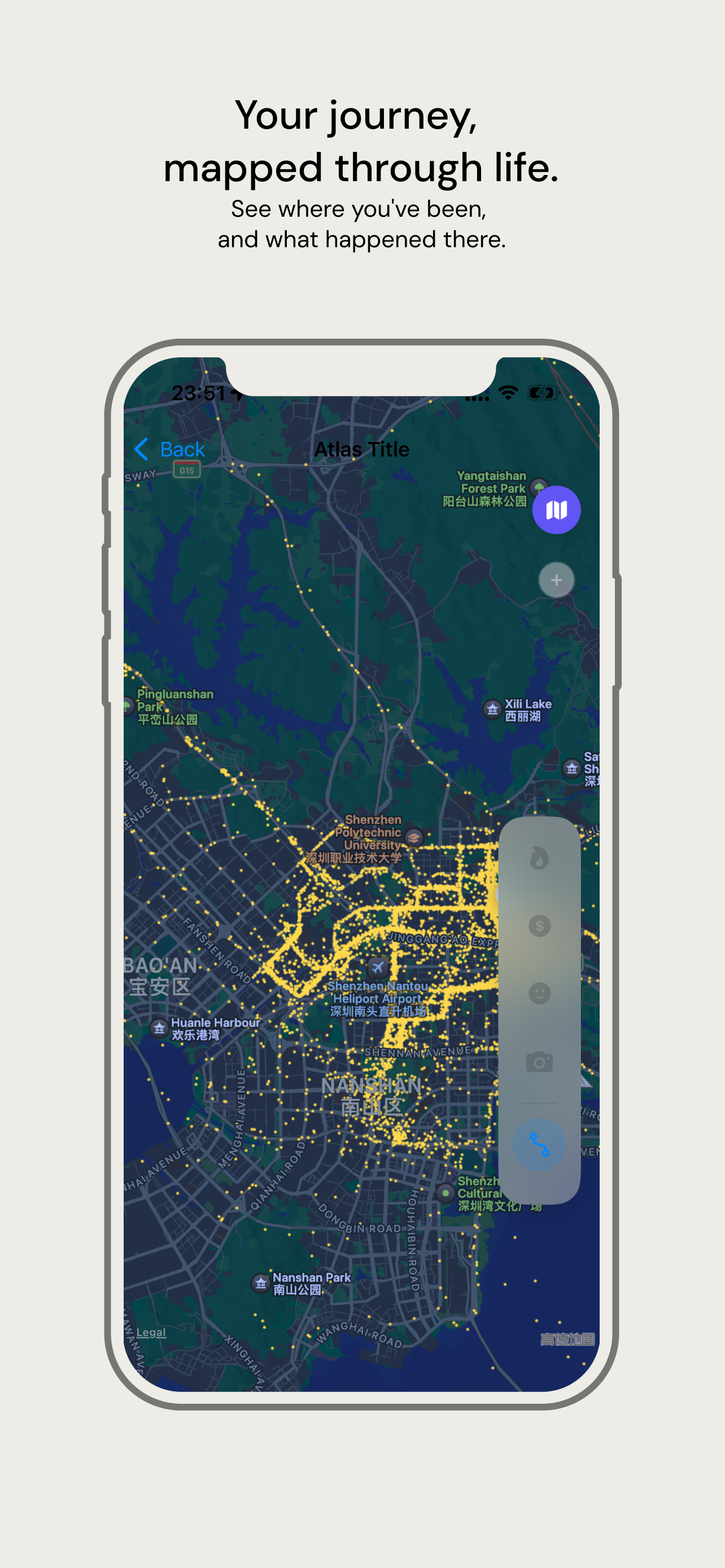
"How do we preserve the magical nostalgia of a continuous life timeline without surrendering our deepest spatial privacy to advertising monopolies?"
The Solution: 100% Local-First Architecture
When building Ousia, we made a radical engineering choice: we operate zero remote location servers.
• Local SQLite Engine: All stay points, GPS trajectories, companion tags, and photos reside inside an encrypted SQLite database on your physical iPhone.
• Zero Third-Party SDKs: No advertising trackers, no Facebook pixel, no Google Analytics harvesting your location packets.
• Open Data Sovereignty: You can export your raw coordinates and spatial trajectories to open formats anytime; expanded exports for journal notes and transaction records are actively in our product roadmap.
How Apple Hardware Makes It Battery-Safe
When Google or Moves ran background location in the past, users watched their battery indicators plummet. This occurred because legacy apps forced the GPS chip to poll satellites 24/7.
In Ousia, battery efficiency is achieved via Apple Significant Location Change (SLC) and sensor-fusion coprocessors. When you are stationary at your desk or home, the GPS hardware enters deep sleep. The phone monitors cell-tower handoffs and Wi-Fi beacons at virtually 0% battery draw.
The high-precision GPS pipeline wakes only when physical displacement is detected—and instantly applies transient anti-drift filters to ensure clean, beautiful street lines.
Reclaiming Your Life Archive
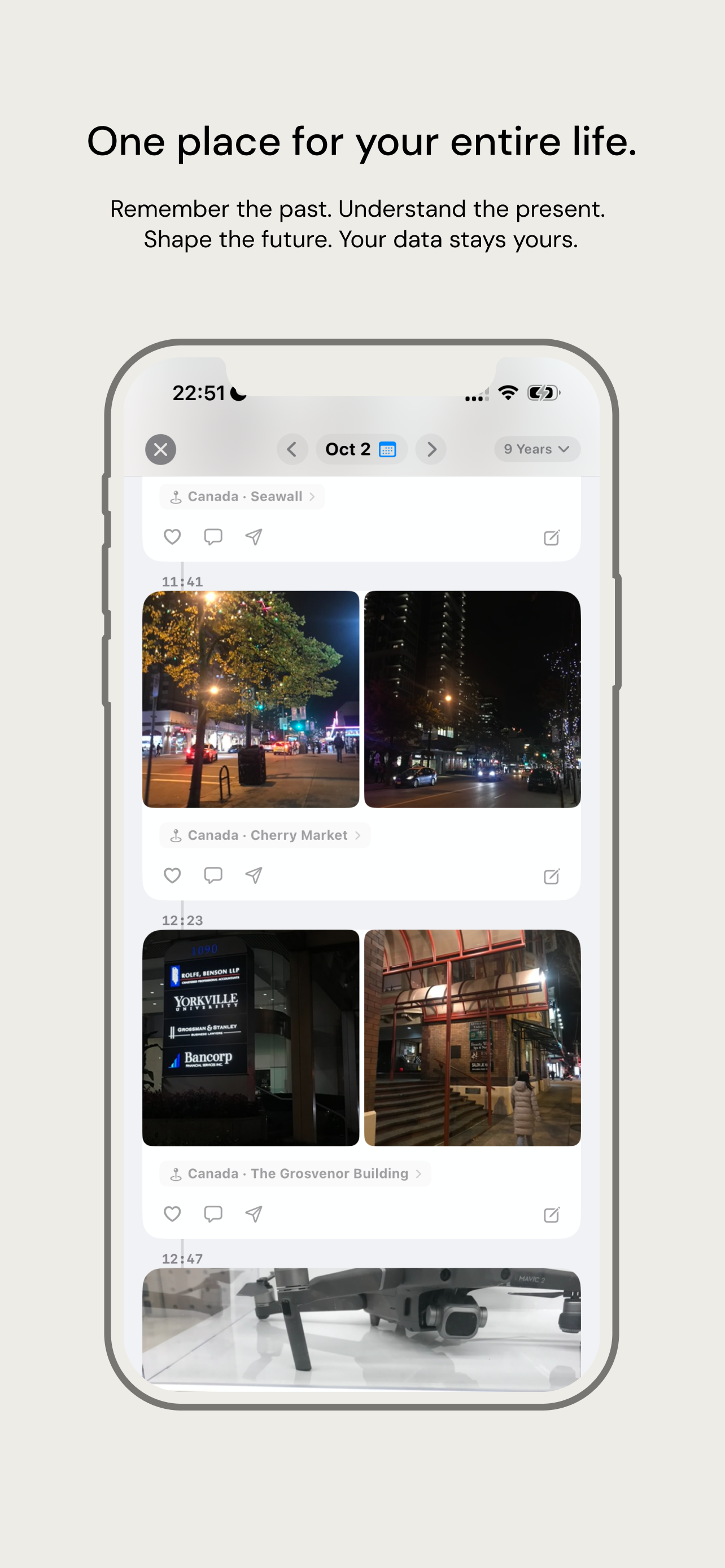
You don't need to entrust your life story to an advertising platform to enjoy a living, automated timeline. With modern iOS architecture, complete spatial intelligence can flourish entirely inside the palm of your hand.
Take Back Your Spatial Sovereignty
Experience 100% private, local-first automatic timeline logging with Ousia.
Download Ousia on the App Store